
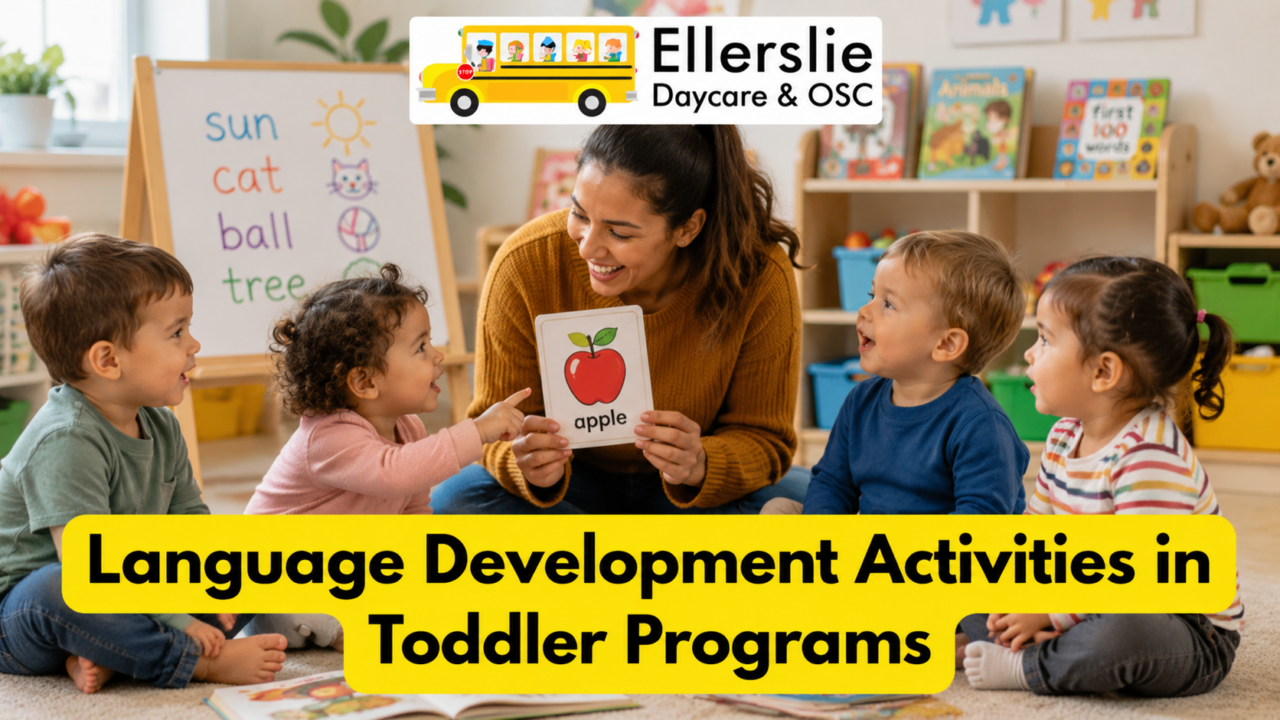
The toddler years are one of the most important stages for language growth. During this period, children rapidly learn words, sounds, gestures, and communication skills that shape their future learning abilities.
Experts in early childhood education explain that strong language development supports literacy, emotional regulation, social interaction, and academic success later in life. As a result, many parents now prioritize toddler programs Edmonton families can trust for structured learning and communication support.
Children develop language through everyday experiences. Talking, singing, storytelling, and play all help toddlers understand how language works. Quality toddler child care Edmonton centers intentionally create opportunities for these experiences throughout the day.
At Ellerslie Daycare & OSC in Edmonton, language-rich environments help toddlers build confidence, vocabulary, listening skills, and communication abilities through engaging early learning activities.
This guide explores how language development activities support toddlers and why high-quality early learning programs matter.
Why Language Development Matters in Early Childhood
Language Skills Begin Before Preschool
Children begin learning communication skills from birth. By toddler age, their brains rapidly process sounds, words, and social interactions.
Research shows that early language exposure strongly influences future reading and academic success.
Toddlers who participate in language-rich environments often develop:
- Larger vocabularies
- Better listening skills
- Improved emotional expression
- Stronger social communication
- Better problem-solving abilities
Communication Supports Social Development
Language is not only about speaking. It also helps children:
- Express emotions
- Build friendships
- Follow directions
- Solve conflicts
- Develop confidence
Toddlers who communicate effectively often experience less frustration during social interactions.
Brain Development Happens Rapidly
According to child development experts, the first five years are critical for brain growth.
During this stage, positive interactions and consistent communication strengthen neural connections related to language and learning.
As a result, high-quality child care Edmonton programs focus heavily on communication-based learning activities.
How Toddler Programs Support Language Development
Play-Based Learning Environments
Learning Through Play
Toddlers learn language naturally through play.
In toddler programs Edmonton families choose, educators use:
- Pretend play
- Group games
- Sensory exploration
- Interactive storytelling
- Hands-on activities
Play encourages children to communicate, ask questions, and describe experiences.
Social Interaction Encourages Speech
Toddlers benefit from interacting with peers daily.
Group activities encourage:
- Turn-taking
- Listening
- Vocabulary use
- Sharing ideas
- Asking questions
These experiences strengthen both expressive and receptive language skills.
Educator-Led Conversations
Trained educators intentionally model language throughout the day.
For example, caregivers may:
- Describe actions aloud
- Ask open-ended questions
- Introduce new vocabulary
- Encourage sentence building
This consistent interaction supports healthy communication growth.
Best Language Development Activities Edmonton Toddler Programs Use
Storytelling and Reading Activities
Daily Reading Time
Reading is one of the most effective language development activities Edmonton educators recommend.
Books expose toddlers to:
- New vocabulary
- Sentence structure
- Sounds and rhythms
- Emotional concepts
- Story comprehension
Research shows children who are read to regularly develop stronger literacy skills.
Interactive Storytelling
Interactive storytelling keeps toddlers engaged.
Educators may:
- Ask predictive questions
- Use puppets
- Encourage sound imitation
- Invite children to repeat phrases
This active participation improves memory and communication.
Picture Book Discussions
Picture books encourage toddlers to describe objects, actions, and emotions.
Simple questions such as:
- “What do you see?”
- “What color is this?”
- “How does the character feel?”
help strengthen vocabulary and comprehension.
Music and Singing Activities
Songs Build Vocabulary
Music helps toddlers remember words and sounds more easily.
Popular activities include:
- Nursery rhymes
- Action songs
- Name songs
- Counting songs
Songs also improve listening and pronunciation skills.
Rhythm Supports Speech Development
Clapping, dancing, and rhythmic movement help toddlers understand language patterns.
Studies suggest music activities support speech processing and memory development.
Repetition Encourages Learning
Toddlers learn through repetition.
Repeated songs and rhymes help children:
- Recognize sounds
- Learn new words
- Improve pronunciation
- Build confidence speaking aloud
Sensory Activities for Language Growth
Sensory Play Encourages Conversation
Sensory activities naturally encourage communication.
Children often describe:
- Textures
- Colors
- Movements
- Feelings
Examples include:
- Water play
- Sand bins
- Play dough
- Finger painting
These preschool-style experiences support vocabulary expansion.
Hands-On Learning Supports Understanding
Toddlers understand language better when paired with physical experiences.
For example:
- Touching ice while hearing “cold”
- Pouring water while hearing “full”
- Sorting shapes while naming colors
This connection strengthens comprehension skills.
Pretend Play and Role-Playing
Imaginative Play Builds Communication
Pretend play helps toddlers practice conversation skills.
Children may pretend to be:
- Doctors
- Teachers
- Chefs
- Parents
- Firefighters
These scenarios encourage expressive language and social interaction.
Role-Playing Teaches Emotional Language
Through pretend play, toddlers learn words related to emotions and relationships.
Educators may encourage children to express:
- Happiness
- Sadness
- Excitement
- Frustration
Emotional vocabulary supports healthy social development.
Group Activities in Early Learning Programs Edmonton
Circle Time Discussions
Circle time is common in early learning programs Edmonton families trust.
Children practice:
- Listening
- Following directions
- Responding to questions
- Participating in conversations
These activities also improve attention span and confidence.
Show-and-Tell Activities
Simple show-and-tell opportunities encourage toddlers to:
- Describe objects
- Use descriptive language
- Practice speaking in groups
Even basic communication builds confidence over time.
Group Games and Language Practice
Interactive games help toddlers learn language in fun ways.
Examples include:
- Simon Says
- Matching games
- Rhyming games
- Color identification
Games create positive learning experiences while reinforcing communication skills.
The Role of Educators in Toddler Language Development
Responsive Communication Matters
Experienced educators respond attentively to toddlers’ attempts to communicate.
Positive responses encourage children to continue speaking and experimenting with language.
Vocabulary Expansion Techniques
Educators often expand toddlers’ speech naturally.
For example:
- Child says: “Dog.”
- Educator responds: “Yes, the brown dog is running.”
This method introduces richer vocabulary and sentence structure.
Encouraging Confidence
Toddlers develop communication confidence when educators:
- Listen patiently
- Praise attempts
- Avoid pressure
- Encourage participation
Supportive environments reduce anxiety around speaking.
How Parents Can Support Language Development at Home
Talk Throughout the Day
Daily conversation matters.
Parents can describe:
- Activities
- Objects
- Feelings
- Routines
Even simple conversations support language growth.
Read Together Daily
Experts recommend reading to toddlers every day.
Short reading sessions build:
- Vocabulary
- Attention span
- Listening comprehension
- Emotional bonding
Limit Passive Screen Time
Interactive learning is more effective than passive screen exposure.
Hands-on play and face-to-face conversations provide stronger language development benefits.
Encourage Questions
Toddlers naturally become curious.
Parents should encourage:
- “Why” questions
- Object naming
- Storytelling
- Exploration
This helps children feel confident using language.
Signs of Healthy Toddler Language Development
Common Communication Milestones
Toddlers often:
- Follow simple directions
- Use short phrases
- Name familiar objects
- Respond to questions
- Imitate sounds and words
However, every child develops at their own pace.
When Parents Should Seek Guidance
Parents may wish to consult professionals if toddlers:
- Rarely speak
- Struggle to respond to sounds
- Show limited interaction
- Lose previously learned words
Early intervention can support communication growth effectively.
Local Relevance: Toddler Programs in Edmonton
Families in Edmonton increasingly prioritize quality toddler programs that support both care and education. Many parents seek environments where children can safely develop communication, social, and cognitive skills through play-based learning.
Edmonton families also value programs that combine nurturing care with structured early learning opportunities.
Ellerslie Daycare & OSC proudly supports local families by offering toddler child care Edmonton parents trust for language-rich learning experiences. Through engaging activities, caring educators, and supportive classrooms, toddlers build essential communication skills every day.
Frequently Asked Questions
What are language development activities for toddlers?
Language development activities help toddlers improve communication, listening, vocabulary, and speech skills. Common activities include reading books, singing songs, storytelling, sensory play, and interactive conversations. These experiences encourage children to express themselves and understand language more effectively during early childhood development.
Why are language activities important in toddler programs?
Language activities help toddlers build communication skills needed for learning, social interaction, and emotional expression. Strong early language development supports literacy, confidence, and future academic success. Quality toddler programs also create structured opportunities for children to practice listening and speaking daily.
How do toddler programs support communication skills?
Toddler programs support communication through play-based learning, group activities, storytelling, music, and educator-led conversations. Educators model vocabulary, encourage interaction, and create language-rich environments that help children develop expressive and receptive communication skills naturally through everyday experiences.
When should toddlers begin early learning programs?
Many children benefit from early learning programs during toddlerhood because this is a critical period for brain and language development. Structured environments provide opportunities for social interaction, communication practice, and cognitive growth that support future preschool and kindergarten readiness.
Who benefits most from language-rich child care programs?
All toddlers benefit from language-rich child care environments, especially children developing communication and social skills. Programs focused on language development help children build confidence, improve vocabulary, strengthen listening abilities, and prepare for future academic and social success.
Conclusion
Language development is one of the most important parts of early childhood growth. Through storytelling, music, sensory play, group interaction, and everyday conversation, toddlers develop the communication skills needed for lifelong learning.
High-quality toddler programs Edmonton families trust create supportive environments where children feel encouraged to express themselves, explore language, and build confidence.
Ellerslie Daycare & OSC proudly offers nurturing toddler child care Edmonton parents rely on for strong early learning experiences and communication development. To learn more about toddler programs and enrollment opportunities, contact Ellerslie Daycare & OSC today at +1 780-466-4610.