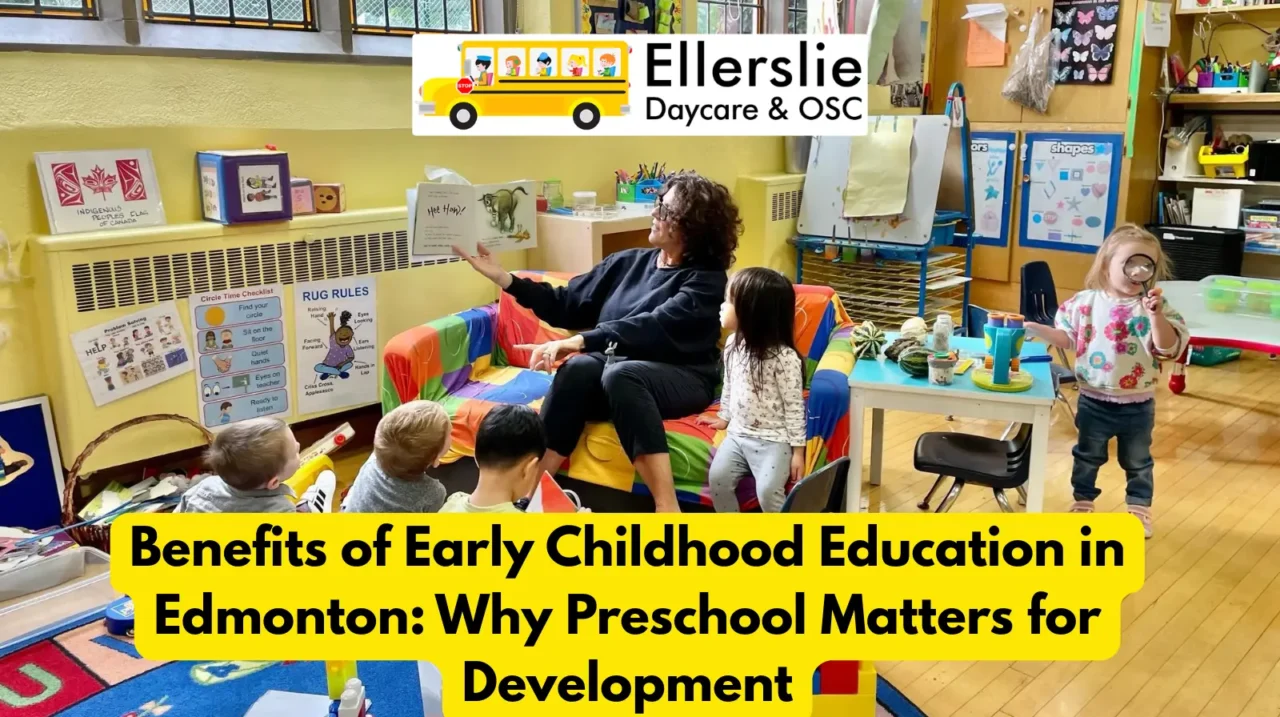
Early childhood is the most important stage of human development. During the first five years, a child’s brain forms connections faster than at any other time in life. That’s why high-quality early childhood education Edmonton programs play a critical role in shaping learning ability, social skills, emotional health, and long-term success.
Parents searching for early daycare near me, preschool Edmonton near me, or trusted pre schools Edmonton options often want to understand how preschool education truly benefits their child. This comprehensive guide explains why early childhood education matters, what children learn in preschool, and how programs like Ellerslie Daycare & OSC support healthy development.
What Is Early Childhood Education?
Early childhood education (ECE) refers to structured learning programs for children typically aged 2 to 5 years before kindergarten. These programs focus on:
- Cognitive development
- Language and communication
- Social and emotional skills
- Physical coordination
- Creativity and curiosity
Quality early childhood education Edmonton programs use play-based learning to encourage exploration and discovery.
Why Early Childhood Education Matters
Scientific research shows that early experiences shape brain architecture. Positive learning environments in preschool strengthen neural pathways responsible for:
- Learning ability
- Memory
- Emotional regulation
- Social interaction
- Problem solving
Children attending quality preschool Edmonton near me programs show stronger academic and social outcomes later in school.
Key Developmental Benefits of Preschool Education
Brain Development & Cognitive Growth
The brain develops rapidly in early childhood. Preschool activities stimulate thinking through:
- Puzzles
- Building blocks
- Matching games
- Sorting tasks
- Problem-solving challenges
These experiences improve memory, reasoning, and attention skills.
Language & Communication Skills
One of the strongest benefits of early childhood education Edmonton programs is language growth. Children expand vocabulary through:
- Storytime
- Songs and rhymes
- Conversations
- Show-and-tell
- Group discussions
Strong language skills are essential for reading and academic success.
Social & Emotional Development
Preschool is often a child’s first structured social environment. Children learn to:
- Share and cooperate
- Manage emotions
- Resolve conflicts
- Follow rules
- Build friendships
These skills improve confidence and classroom readiness.
School Readiness & Independence
Children in preschool Edmonton near me programs develop independence through:
- Following routines
- Self-care tasks
- Listening to instructions
- Completing activities
- Transitioning between tasks
These abilities ease the transition to kindergarten.
Early Literacy & Numeracy Foundations
Preschool introduces basic academic concepts in a playful way:
- Letter recognition
- Phonics awareness
- Counting
- Shapes
- Patterns
- Numbers
Children gain foundational skills without pressure.
Physical Development & Motor Skills
Movement is essential for development. Preschool activities support:
Gross Motor Skills
- Running
- Climbing
- Jumping
- Ball play
Fine Motor Skills
- Drawing
- Cutting
- Beading
- Writing preparation
Motor skills support coordination and handwriting readiness.
Creativity & Imagination Growth
Creative activities help children express themselves through:
- Art and crafts
- Music and dance
- Pretend play
- Story creation
Creativity strengthens problem solving and emotional expression.
Long-Term Benefits of Early Childhood Education
Children who attend high-quality pre schools Edmonton programs often show:
- Better academic achievement
- Higher graduation rates
- Stronger social skills
- Improved attention
- Greater confidence
- Reduced behavioral issues
Early learning provides lifelong advantages.
How Preschool Supports Emotional Well-Being
Quality preschool environments promote emotional health by:
- Creating secure routines
- Offering nurturing relationships
- Teaching emotion recognition
- Encouraging expression
- Supporting self-regulation
Children develop resilience and coping skills.
The Role of Play in Early Childhood Education
Play is the primary learning method in early childhood education Edmonton programs.
Play-based learning allows children to:
- Explore freely
- Experiment safely
- Solve problems
- Collaborate
- Imagine
Research shows children retain knowledge better through play than formal instruction.
What Children Learn in Edmonton Preschool Programs
A typical preschool Edmonton curriculum includes:
- Language activities
- Early math games
- Art and creativity
- Music and movement
- Outdoor exploration
- Social interaction
- Storytime
- Sensory play
These experiences support whole-child development.
What Is Early Childhood Education?
Early childhood education (ECE) refers to structured learning programs for children typically aged 2 to 5 years before kindergarten. These programs focus on:
- Cognitive development
- Language and communication
- Social and emotional skills
- Physical coordination
- Creativity and curiosity
Quality early childhood education Edmonton programs use play-based learning to encourage exploration and discovery.
Why Early Childhood Education Matters
Scientific research shows that early experiences shape brain architecture. Positive learning environments in preschool strengthen neural pathways responsible for:
- Learning ability
- Memory
- Emotional regulation
- Social interaction
- Problem solving
Children attending quality preschool Edmonton near me programs show stronger academic and social outcomes later in school.
Key Developmental Benefits of Preschool Education
Brain Development & Cognitive Growth
The brain develops rapidly in early childhood. Preschool activities stimulate thinking through:
- Puzzles
- Building blocks
- Matching games
- Sorting tasks
- Problem-solving challenges
These experiences improve memory, reasoning, and attention skills.
Language & Communication Skills
One of the strongest benefits of early childhood education Edmonton programs is language growth. Children expand vocabulary through:
- Storytime
- Songs and rhymes
- Conversations
- Show-and-tell
- Group discussions
Strong language skills are essential for reading and academic success.
Social & Emotional Development
Preschool is often a child’s first structured social environment. Children learn to:
- Share and cooperate
- Manage emotions
- Resolve conflicts
- Follow rules
- Build friendships
These skills improve confidence and classroom readiness.
School Readiness & Independence
Children in preschool Edmonton near me programs develop independence through:
- Following routines
- Self-care tasks
- Listening to instructions
- Completing activities
- Transitioning between tasks
These abilities ease the transition to kindergarten.
Early Literacy & Numeracy Foundations
Preschool introduces basic academic concepts in a playful way:
- Letter recognition
- Phonics awareness
- Counting
- Shapes
- Patterns
- Numbers
Children gain foundational skills without pressure.
Physical Development & Motor Skills
Movement is essential for development. Preschool activities support:
Gross Motor Skills
- Running
- Climbing
- Jumping
- Ball play
Fine Motor Skills
- Drawing
- Cutting
- Beading
- Writing preparation
Motor skills support coordination and handwriting readiness.
Creativity & Imagination Growth
Creative activities help children express themselves through:
- Art and crafts
- Music and dance
- Pretend play
- Story creation
Creativity strengthens problem solving and emotional expression.
Long-Term Benefits of Early Childhood Education
Children who attend high-quality pre schools Edmonton programs often show:
- Better academic achievement
- Higher graduation rates
- Stronger social skills
- Improved attention
- Greater confidence
- Reduced behavioral issues
Early learning provides lifelong advantages.
How Preschool Supports Emotional Well-Being
Quality preschool environments promote emotional health by:
- Creating secure routines
- Offering nurturing relationships
- Teaching emotion recognition
- Encouraging expression
- Supporting self-regulation
Children develop resilience and coping skills.
The Role of Play in Early Childhood Education
Play is the primary learning method in early childhood education Edmonton programs.
Play-based learning allows children to:
- Explore freely
- Experiment safely
- Solve problems
- Collaborate
- Imagine
Research shows children retain knowledge better through play than formal instruction.
What Children Learn in Edmonton Preschool Programs
A typical preschool Edmonton curriculum includes:
- Language activities
- Early math games
- Art and creativity
- Music and movement
- Outdoor exploration
- Social interaction
- Storytime
- Sensory play
These experiences support whole-child development.
Why Quality Preschool Matters More Than Ever
Modern kindergarten expectations are higher than before. Children are expected to:
- Recognize letters
- Count objects
- Follow instructions
- Work in groups
- Manage emotions
Quality preschool Edmonton near me programs prepare children for these expectations.
Choosing the Right Early Childhood Education Edmonton Program
When evaluating early daycare near me or pre schools Edmonton, look for:
✔ Qualified educators
✔ Safe licensed facility
✔ Structured routine
✔ Play-based curriculum
✔ Positive interactions
✔ Age-appropriate activities
✔ Parent communication
✔ Outdoor play opportunities
These features indicate strong early learning programs.
Why Parents Choose Ellerslie Daycare & OSC Preschool
Families searching for preschool Edmonton near me trust Ellerslie Daycare & OSC because it offers:
- Quality early childhood education Edmonton programs
- Play-based preschool curriculum
- Caring experienced educators
- Safe learning environment
- Structured developmental activities
- Social skill development focus
- School readiness preparation
The program supports cognitive, social, and emotional growth.
How Early Childhood Education Supports Working Families
Preschool programs also help parents by providing:
- Reliable childcare
- Consistent routines
- Social development opportunities
- Learning enrichment
- Kindergarten preparation
This balance supports both family and child well-being.
Signs Your Child Benefits From Preschool
Children thriving in preschool often show:
- Increased vocabulary
- Improved social skills
- Greater independence
- Curiosity and engagement
- Confidence in group settings
- Emotional regulation
These are strong indicators of healthy development.
How Parents Can Support Early Learning at Home
Preschool learning extends beyond the classroom. Parents can support development by:
Reading Daily: Builds language and literacy.
Talking Frequently: Encourages communication skills.
Encouraging Play: Supports creativity and thinking.
Practicing Counting: Strengthens math awareness.
Promoting Independence: Builds confidence.
Home support enhances preschool benefits.
The Critical Early Years: Birth to Five
Neuroscience confirms that 90% of brain development occurs before age five. Experiences during this period shape:
- Intelligence
- Personality
- Emotional health
- Learning ability
Quality early childhood education Edmonton programs maximize this critical developmental window.
Final Thoughts: Why Preschool Matters for Development
Early childhood education shapes how children learn, interact, and grow for the rest of their lives. High-quality early childhood education Edmonton programs strengthen cognitive ability, social skills, emotional health, and academic readiness.
Preschool is not just childcare—it is the foundation of lifelong learning. Programs like Ellerslie Daycare & OSC provide nurturing environments where children build confidence, curiosity, and essential developmental skills.
Choosing a quality preschool today gives your child the strongest possible start for tomorrow.